

What Is Freemasonry?
Freemasonry is one of the world’s oldest and most respected fraternal organisations, with a history that spans centuries and a presence that continues to thrive across the United Kingdom today. Yet for many people, Freemasonry remains misunderstood or unfamiliar.
So, what is Freemasonry, and what does it mean to become a Freemason in modern Britain? This article explores the origins, values, and purpose of Freemasonry, and how lodges such as Oakeswell Lodge No. 8117 continue this tradition in the West Midlands.
The Origins of Freemasonry
The roots of Freemasonry can be traced back to the medieval stonemasons’ guilds of Britain and Europe. These craftsmen were responsible for building cathedrals, castles, and civic buildings, and they formed organised lodges to regulate their trade, pass on skills, and uphold standards of workmanship and conduct.
Over time, these lodges began to admit men who were not operative stonemasons but who shared an interest in the moral teachings and values of the fraternity. By the 17th and 18th centuries, Freemasonry had evolved into a symbolic and philosophical organisation, spreading throughout England, Scotland, Ireland, and later across the wider world.
The growth of Freemasonry coincided with the Enlightenment, a period that emphasised reason, learning, tolerance, and personal responsibility. These ideals remain central to Freemasonry today.
The Core Principles of Freemasonry
Freemasonry is founded on three timeless principles, known as Brotherly Love, Relief, and Truth. These principles guide Freemasons in their personal conduct, their relationships with others, and their engagement with society.
Brotherly Love
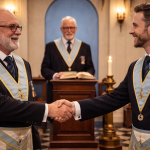
Freemasonry encourages mutual respect, friendship, and understanding among its members. Within a lodge, men from different backgrounds, professions, and walks of life meet on equal footing, united by shared values rather than social status.
Relief
Charity and service are fundamental to Freemasonry. Freemasons support charitable causes at local, regional, and national levels, offering practical help and financial support to those in need. In the West Midlands, Masonic lodges are actively involved in community fundraising and charitable initiatives.
Truth
Freemasonry places great importance on integrity, honesty, and the pursuit of knowledge. Members are encouraged to reflect on their own conduct, strive for self-improvement, and live by strong moral principles.
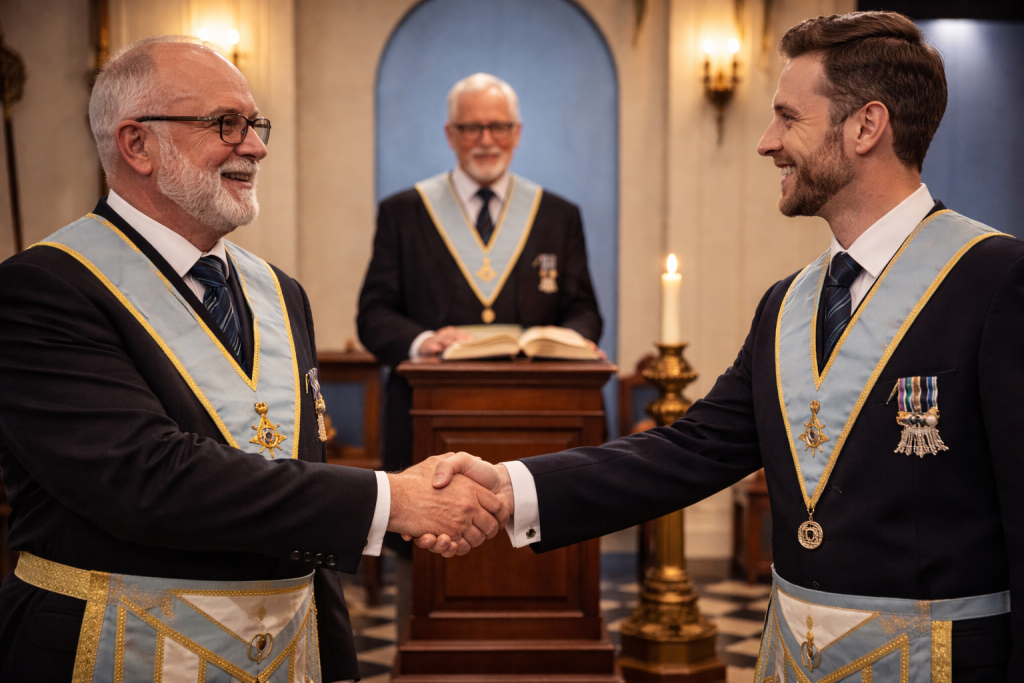
What Freemasonry Offers Its Members
Freemasonry is often described as a journey rather than a destination. Through structured learning, symbolism, and shared experience, members are encouraged to develop qualities such as patience, humility, responsibility, and perseverance.
A Masonic lodge also provides a strong sense of belonging. Regular meetings, social gatherings, and charitable activities foster lasting friendships and a supportive environment where members look out for one another.
For many Freemasons in Wolverhampton, Walsall, Wednesbury, Bilston, and the wider West Midlands, their lodge becomes an important part of their personal and social life.
Freemasonry in the Modern United Kingdom
Despite its long history, Freemasonry is very much a modern organisation. Lodges across England and Wales continue to adapt to contemporary life while remaining true to their traditions.
Freemasonry today brings together men from all walks of life, united not by occupation or background, but by a shared commitment to ethical living, personal development, and community service. In an increasingly fast-paced and disconnected world, Freemasonry offers a space for reflection, friendship, and meaningful connection.
The Role of Symbolism in Freemasonry
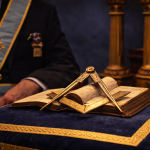
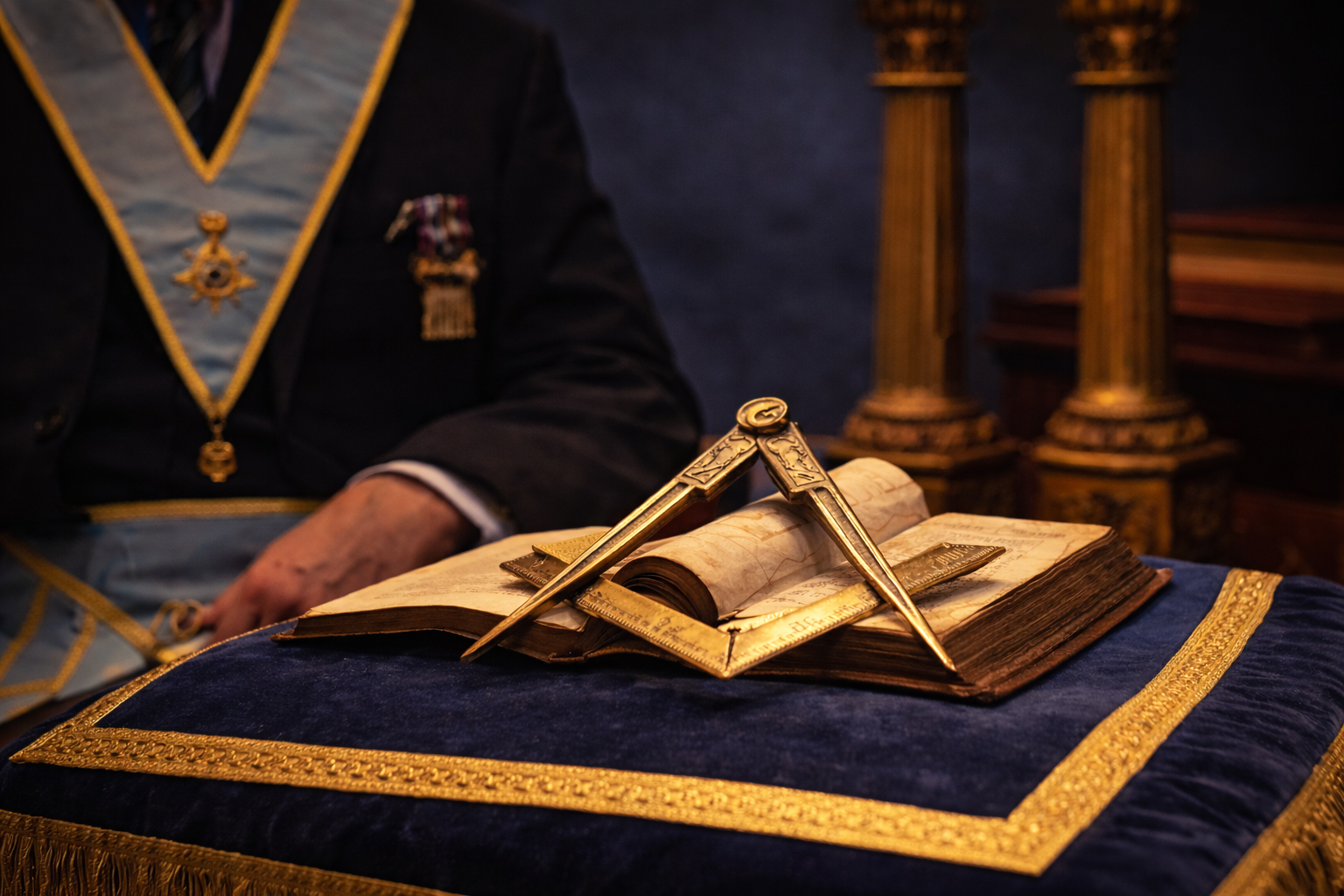
Freemasonry is well known for its symbolism, much of which originates from the tools of the medieval stonemasons. Symbols such as the square and compasses, the level, and the plumb rule are used to illustrate moral lessons and ethical principles.
These symbols, together with ceremonies and traditions, help convey the teachings of Freemasonry in a thoughtful and memorable way. While the ceremonial aspects of Freemasonry are private to members, the values they represent are universal and publicly expressed through conduct and charitable action.
Becoming a Freemason in the West Midlands
Freemasonry is open to men of good character who believe in self-improvement and wish to contribute positively to their community. Those interested in joining are encouraged to learn about local lodges and speak with existing members.
At Oakeswell Lodge No. 8117, we are proud to be a small, friendly Freemasons’ lodge serving Wolverhampton, Walsall, Wednesbury, Bilston, and surrounding areas. We welcome enquiries from those who are curious about Freemasonry and wish to learn more in an open and informal way.
Joining Freemasonry is not about secrecy or privilege; it is about embarking on a lifelong journey of learning, fellowship, and service.
In Closing
Freemasonry has endured for centuries because its values remain relevant: integrity, compassion, friendship, and personal responsibility. It offers men the opportunity to become better individuals and, through that, to contribute to a better society.
If you are seeking a fraternity grounded in tradition, guided by strong moral values, and active within the West Midlands community, Freemasonry may be a path worth exploring.
We invite you to continue learning about Freemasonry and, if inspired, to take the first steps on your own Masonic journey.